
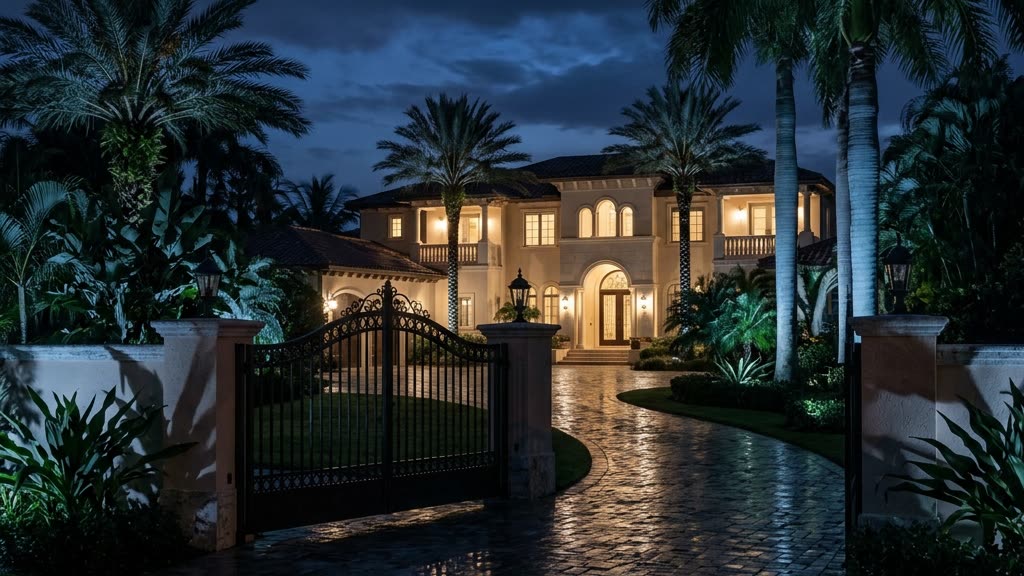
Most estate security plans I review make one quiet assumption: the intruder will arrive when the family is away. That assumption is usually correct. It also means most plans are burglary plans wearing a broader label. Home invasion prevention is a different discipline, because home invasion is a different crime. The burglar builds his plan around your absence. The invader builds his around your presence. After decades of assessing residences and running protective operations for families, I have found that the households in real trouble are rarely the ones with too little equipment. They are the ones asking a single plan to cover two very different problems. This brief explains how the threats diverge, where the defenses overlap, and how to prepare for both without turning your home into something your family resents living in.
Two Crimes, Two Logics
Burglary is a crime of avoidance. The professional crews working high-value neighborhoods invest most of their effort before the entry: identifying homes worth the risk, confirming the family’s routine, and choosing a window when the property sits empty. National crime reporting from the FBI (opens in a new tab) has long reflected this pattern, with residential burglary concentrating in hours when homes are unoccupied, because the offender’s method depends on never meeting you. I have written separately about how burglary crews choose luxury homes, and the short version is that they behave like analysts, reading lighting, landscaping, package buildup, and staff patterns the way an underwriter reads a file.
A home invasion inverts every one of those preferences. The offenders want you present, because you are the mechanism: you open the safe, you disclose the code, you comply because your family is in the house. That makes home invasion rarer, and it makes it far more dangerous. It is usually a targeted crime. Something signaled that the household keeps accessible value: jewelry, watches, cash-intensive business dealings, a publicized sale, a visible lifestyle. Law enforcement task forces in Florida have repeatedly documented patient target development by sophisticated residential crews, including the South American theft groups working Florida estates.
The planning consequence is simple to state. Burglary defense is mostly deterrence and denial: convince the crew your home is a bad risk and they move on. Home invasion prevention is mostly time and warning: detect the approach early, delay the entry, and give your family a rehearsed place to go and a way to summon help. A plan that only does the first has not addressed the second.
Occupancy Changes Everything
When I walk an estate, one of my first questions is unglamorous: how is the system armed while you are home? The honest answer is often that it is not. Perimeter sensors stay off because the dog trips them. Interior motion stays off because people live there. The result: a home well defended precisely when empty and nearly undefended when the family is inside, the opposite of what a home invasion requires. A serious program defines two postures and gives them equal rigor.
Away mode: defending the property
This is the classic burglary posture: full perimeter and interior detection, monitored response, appearance-of-occupancy routines, and information discipline so travel does not announce itself. Predictability is the quiet vulnerability: school runs and staff schedules hand a surveilling crew its timetable.
Home mode: defending the people
Home mode assumes the family is inside and asks a harder question: how much warning do we get, and what do we do with it? Perimeter detection stays live while interior zones near bedrooms rest. Doors stay locked during the day, not only at night, because a meaningful share of confrontation entries come through an unlocked door or an answered one. Arrivals and departures deserve particular attention. The driveway, the garage threshold, and the gate are where residents are most exposed and most distracted, and approaches are often timed to the seconds when the vehicle door is open and hands are full.
Layers That Serve Both Plans
The encouraging news is that the two plans share most of their infrastructure. The difference is emphasis and tuning.
Push detection to the property line
By the time someone touches a door, most of your decision time is gone. On acreage and waterfront parcels the goal is to know about an approach at the fence line or the seawall, not at the threshold. On estates where early warning matters, our team deploys GuardDog AI, a third-party enterprise intrusion-detection platform that we integrate and tune as its exclusive reseller partner. The brand matters less than the principle: analytics at the perimeter that can tell a person from a palm frond, with alerts pushed to the family and a monitoring point in real time. Consumer camera ecosystems generally do not meet this standard, for reasons I detailed in why cloud cameras are the weak link.
Make entry slow and loud
Delay serves both plans, for different reasons. For a burglary crew, a reinforced door and laminated glazing raise the cost past the point of interest, and they leave. Against an invasion attempt, those same measures turn a sudden breach into a noisy, drawn-out one, and every added second of noise is warning your family can use. Solid-core doors, reinforced strikes and hinges, deadbolts thrown consistently, and glazing upgrades on vulnerable elevations do more for home invasion prevention than any single camera.
The Refuge: A Plan Measured in Minutes
I avoid the Hollywood term panic room because it sets the wrong expectation. Most families do not need a vault. They need a refuge: a designated, hardened interior room, usually the primary suite or an adjacent closet, that everyone can reach quickly, lock decisively, and communicate from. The standard it must meet is specific: resist entry longer than it takes armed response to arrive once you have called. A functional refuge has a solid door in a reinforced frame, a deadbolt, a phone and charger that live there permanently, a flashlight, and ideally a communication path that does not depend on the house network or power. Household emergency planning guidance from Ready.gov (opens in a new tab) translates well here: plans fail on small details, like a locked hallway door between a child’s bedroom and the rally point, and only a walkthrough surfaces them.
The Family Protocol
Hardware without behavior is scenery. The protocol I build with families is short enough to remember under stress:
- One code word that means stop everything and move to the refuge now, taught to children calmly and practiced the way schools practice fire drills.
- Clear roles: who gathers which child, who carries the phone, who locks the refuge door. Ambiguity costs seconds.
- Door discipline: no one opens the door to an unexpected visitor without visual confirmation, and no delivery requires an open door.
- A driveway habit: scan before exiting the vehicle, and treat a blocked gate or a tailgating car as a signal to keep driving and call for help, not to stop.
- A compliance rule for the worst case: property is surrendered, heroics are not attempted, and everyone’s job is to be a calm, observant witness. Nothing in the safe is worth a family member.
Rehearse twice a year. The first walkthrough always finds something: a refuge door that does not actually lock, a code word a teenager never learned, a phone that sleeps downstairs.
Staff, Vendors, and the Information Problem
Most invasions of well-prepared homes do not begin at a lock. They begin with information: a schedule, a safe location, an alarm habit, an interior photo shared by a subcontractor. Housekeepers, trainers, project crews, and delivery patterns all accumulate knowledge of your interior and your rhythm. I covered the vetting and compartmentalization framework in my note on contractor and vendor insider risk at estates, and that discipline matters as much as any device: background screening, escorted access to sensitive zones, and a household culture that does not discuss travel or valuables in front of rotating personnel. Documentation belongs here as well. Photograph and appraise significant valuables, keep the records off-site, and review coverage with your carrier. The Insurance Information Institute (opens in a new tab) offers sensible guidance on home inventories, and families who can hand investigators a documented list recover more and resolve claims faster.
Two Plans, One System
None of this should feel like living in a facility. The estates our veteran-owned team at SDVOSB.services assesses along Florida’s coasts, from Naples to the gated communities of Boca Raton, show that layered protection can be nearly invisible when it is designed rather than accumulated. For the full architecture, from perimeter to protocol, see our guide to luxury home security in Florida. The families who sleep well are not the ones with the most devices. They are the ones whose burglary plan and home invasion plan were built together, tested together, and understood by everyone under the roof.
Frequently Asked Questions
Do we need a safe room, or is an alarm enough?
An alarm is necessary and not sufficient. Alarms excel at the burglary problem: deterring entry and summoning response to an empty house. A home invasion unfolds with your family inside and response minutes away. A refuge converts warning into safety during those minutes. A hardened door, a reliable lock, and a phone in the room cover most of the requirement.
What is the single most effective step for home invasion prevention?
Keep meaningful detection armed while you are home. Most households are defended only when empty. Perimeter detection that stays live in home mode, paired with strict door discipline for unexpected visitors, closes the two most common openings: the unnoticed approach and the answered door.
How do home invaders choose targets differently than burglars?
Burglary crews select for absence and easy exit; they want maximum value at minimum risk of contact. Invasion offenders select for value that requires a person: safes, codes, jewelry kept at home, cash. Visible wealth, publicized transactions, and loose talk around rotating staff raise the second risk more than the first.
Should anyone in the family ever resist?
Our protocol is unambiguous: comply regarding property, stay together, observe carefully, and leave intervention to responders. The objective in every scenario is the same, everyone sleeps at home that night. That is why serious planning emphasizes warning time and refuge over confrontation.
Every family’s exposure is different, and the honest answer to most security questions begins with a walk of the property. If you would like an experienced set of eyes on your estate’s burglary posture, its home invasion plan, or both, request a private consultation or call (239) 710-1772. The conversation is discreet, and it starts with your family’s routine, not with equipment.