
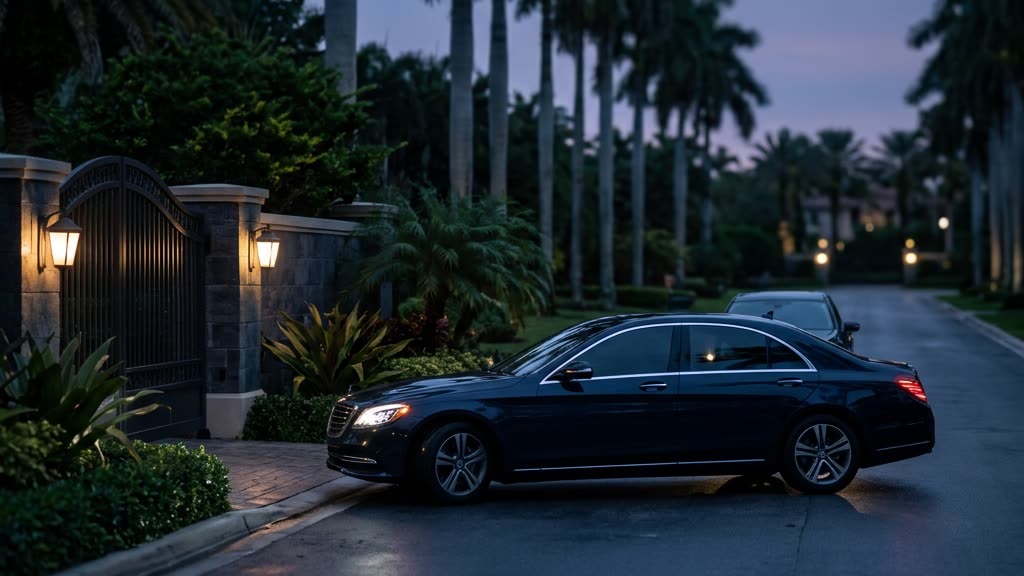
Most people picture carjacking prevention as something that happens in a single moment: a stranger appears at the window, and a split-second decision decides everything. In my experience running protective operations for high-net-worth families, that is exactly the wrong way to think about it. By the time someone is standing at your door glass, most of your options are already gone. The real work of carjacking prevention happens long before that instant, in the routes you choose, the way you approach your own gate, and the small habits you build every time you get behind the wheel.
I have spent a career assessing how principals move through the world, from leading security infrastructure for major institutions to running protective operations for families who value their privacy. One pattern holds almost everywhere: the vehicle is the least protected part of an otherwise well-protected life. A family might invest heavily in cameras, gates, and monitoring at the estate, then climb into a car and give almost no thought to the twenty minutes of exposure between the driveway and the office. This piece is about closing that gap, and doing it without turning your daily commute into an ordeal.
The Vehicle Is the Softest Part of a Hard Target
A well-run estate is a hard target. It has layers: perimeter, lighting, cameras, controlled access, and someone paying attention. A car sitting at a red light has none of that. It is a soft, predictable, and momentarily stationary container holding the people and possessions an opponent most wants access to. Law enforcement has long documented that vehicle-based crimes cluster around predictable pause points, the places where a driver has to slow, stop, or wait. The car does not make you safe. It makes you portable, and portability cuts both ways.
For affluent families, the exposure is compounded by visibility. A recognizable vehicle, a fixed schedule, and a known destination together form a pattern that anyone watching can learn. Carjacking prevention, at its core, is about denying that pattern and preserving your ability to react. Everything that follows serves those two goals.
Route Awareness Starts Before You Turn the Key
The single most underused security tool available to any driver is planning. Before you leave, you should already know how you intend to get where you are going, what the alternatives are, and where along the way you are most exposed. This is not paranoia. It is the same forethought a pilot applies to a flight plan.
Vary the Pattern
Predictability is the gift you hand to anyone conducting surveillance. If you leave at the same minute, take the same turn, and stop at the same coffee shop every morning, you have written the script for someone else. I ask the families I work with to build genuine variation into their movements: different departure times within a reasonable window, two or three viable routes to each common destination, and no single habit reliable enough to set a watch by. Variation does not need to be dramatic to be effective. It only needs to make you an unreliable subject to observe.
Know Your Chokepoints and Your Outs
Every route has chokepoints, the places where you are forced to slow and your escape options narrow: gated turns, tight parking structures, dead-end driveways, congested intersections, and the last block before your home. These are where incidents concentrate, and they deserve conscious attention. As you drive, keep a running sense of your outs, the space and direction you could use to leave if you had to. In dense areas like the estates and corridors around Miami, where traffic funnels through predictable pinch points, this awareness matters even more. The habit is simple: at every stop, ask yourself where you would go if you needed to move. Most of the time the answer is nothing. The value is in already having asked.
Arrival and Departure: Where Most Incidents Happen
If I had to name the two most dangerous moments in a principal’s day, they would be the arrival home and the departure from it. These are transitions, and transitions are where discipline erodes. You are tired, distracted, reaching for a gate remote, thinking about the day. An opponent who has studied you knows this, which is why the approach to your own residence deserves more attention than any stretch of open road.
The Gate and the Approach
The gate is a natural trap. You slow, you stop, you wait for it to open, and for those few seconds you are stationary in a fixed and known location. I coach families never to arrive at a closed gate. Time the approach so the gate is opening as you reach it, and never sit idling in front of a barrier that has not begun to move. Before you turn in, take a pass or a glance to confirm the approach is clear. If something looks wrong, a vehicle parked where none should be, a person lingering, a door ajar, you do not investigate. You continue past, and you circle back once you have confidence, or you call for help. The residence and the vehicle are two halves of one security picture, which is why estate protection and driving discipline belong in the same conversation. I go deeper into how the home layer supports everything else in our guide to luxury home security in Florida.
Garages, Valets, and Public Lots
Away from home, arrival discipline still applies. Back into parking spaces when it is practical, so you can leave nose-out without maneuvering. Park in well-lit, well-trafficked areas rather than isolated corners. Have your keys and your plan in hand before you reach the vehicle, not after, and keep your attention up rather than buried in a phone as you cross a lot. With valets and attendants, be aware of who has your keys and for how long, and never leave sensitive items or documents in a car you are handing to a stranger. The same alertness applies to the car itself when it sits unattended. Modern vehicles introduce their own quiet vulnerabilities, from key-fob cloning to signal amplification, which I cover in our field note on keyless car theft and relay attacks. A carjacking is not the only way to lose a vehicle, and the countermeasures overlap.
What Professional Training Actually Changes
I am often asked whether a capable adult who has driven for decades really needs formal secure-driving instruction. The honest answer is that good instruction does not teach you to drive. It teaches you to see, to decide, and to buy yourself time. I have contributed to professional protective-driving and anti-terrorist driving programs, and the most valuable lessons were rarely about handling a car at speed. They were about the seconds before anything happens.
Space Becomes a Habit
Trained drivers keep space. At a stop, they leave enough room to the vehicle ahead to steer around it without reversing, roughly enough pavement to see the rear tires of the car in front. That gap is not about comfort. It is your entire menu of options if you need to leave. Untrained drivers close the gap out of politeness and habit; trained drivers protect it without thinking. This single reflex, holding space at every stop, prevents more bad outcomes than any dramatic maneuver, because it keeps a boxed-in situation from ever forming.
The Decision to Leave
The other thing training changes is the willingness to act early and decisively. Most people freeze in the face of an approaching threat because they are trying to make sense of it, to decide whether the person walking toward the car is a real danger or just a pedestrian. That hesitation is the vulnerability. Good instruction rehearses the decision in advance, so that when the pattern matches, the response is already loaded: doors locked, gaps kept, foot ready, and a clear rule that the vehicle is a tool for leaving, not for standing your ground. Property is replaceable. If an opponent wants the car and you can no longer safely deny them, the car goes and the people leave. Rehearsing that hierarchy calmly, before any adrenaline is involved, is what separates a trained response from a panicked one. The U.S. Department of Transportation’s National Highway Traffic Safety Administration (opens in a new tab) offers sound baseline guidance on vehicle safety, and the FBI (opens in a new tab) treats carjacking as the serious federal crime it is, which is worth remembering when you weigh a set of keys against your family’s safety.
Folding the Vehicle Into a Complete Security Picture
Secure driving is not a standalone skill. It is one layer in a system that should extend from the front gate to the road to the hotel you check into on a trip. Families who travel frequently face the added challenge of unfamiliar routes, unvetted drivers, and destinations where the local risk picture is genuinely different from home; I address that in our guidance on travel security for wealthy families. And when children, staff, and multiple schedules are involved, the coordination problem grows quickly, which is the heart of building real executive protection for families rather than protecting a single individual.
The point of connecting these layers is proportion. Not every family needs a motorcade, and I am wary of anyone who tells you otherwise. Most of my clients gain the majority of their real protection from unglamorous habits: varied routes, disciplined arrivals, maintained space, and a rehearsed decision to leave. A veteran-owned protective operations team can help you assess where your genuine exposure lies and match the response to it, rather than selling capability you do not need. Practical readiness resources such as Ready.gov (opens in a new tab) are a reasonable place for any family to begin building the planning mindset that underlies all of this.
Frequently Asked Questions
Is professional secure-driving training worth it if I already drive well?
Yes, because the training is not really about driving mechanics. It builds the habits of seeing threats early, keeping escape space at every stop, and rehearsing decisions before adrenaline is involved. A skilled driver with no security instinct is still exposed. The value is in the reflexes, not the horsepower.
What is the single most important habit for carjacking prevention?
Keeping space at stops. Leave enough room ahead of you to steer around the vehicle in front without reversing. That one reflex preserves your ability to leave and prevents the boxed-in situations where most incidents turn serious. It costs nothing and works everywhere.
Are some locations genuinely more dangerous than others?
Exposure concentrates at chokepoints and transitions: gates, tight garages, congested intersections, and the last block before home. It is less about entire neighborhoods being unsafe and more about specific pause points where you are slow, stationary, and predictable. Learn your routes’ pinch points and give them extra attention.
Do I need an armored vehicle?
For most families, no. Armor solves a narrow set of high-threat problems and introduces cost, weight, and false confidence. The habits described here, route variation, arrival discipline, maintained space, and a rehearsed willingness to leave, deliver more real protection for the vast majority of principals than hardware does.
Secure driving rewards quiet consistency far more than dramatic capability. If you would like a candid assessment of how your family moves, where you are genuinely exposed, and which habits will close the gap without disrupting your life, I am glad to talk it through. You can request a private consultation or reach our team directly at (239) 710-1772, and we will keep the conversation practical, discreet, and grounded in what actually protects the people who matter to you.