
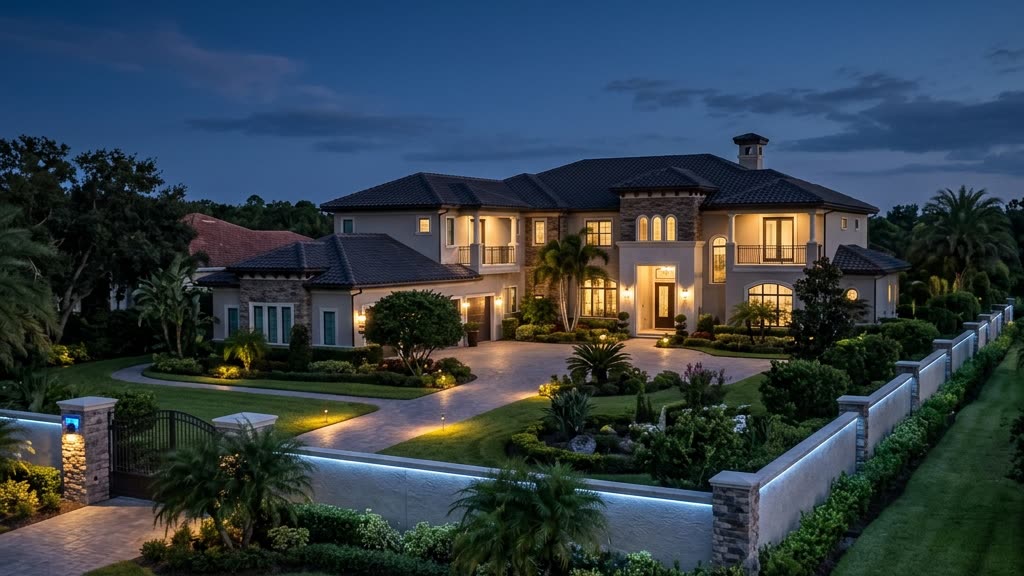
When a high-net-worth family asks me how to choose a home security company, they usually open with hardware: which cameras, which panel, which brand of sensor. I understand the instinct, but it is the wrong place to begin. In more than two decades of running protective operations and building security infrastructure for private families and institutions, I have learned that the equipment is the least important variable in the equation. The company behind it, its people, its process, the discipline of its monitoring, and the seriousness of its service, decides whether that equipment ever protects anyone.
This guide is written for owners of significant homes who want to make that decision well, once, rather than three times. Learning how to choose a home security company at this level is less like buying a product and more like retaining a firm. You are hiring judgment, and judgment does not come in a box. Below is the framework I give the families I advise, organized around the four things that actually separate a professional from a salesperson: credentials, design process, monitoring, and service. It sits alongside the broader picture I lay out in my overview of luxury home security in Florida, and it is meant to make you a harder client to sell to and a better one to serve.
Start With Credentials, Not the Catalog
The first filter is uncomfortable for many vendors because it has nothing to do with what they are selling. Before you look at a single product line, look at the firm.
Ask who holds the license and in what name. In most states a company that installs and monitors alarm systems must be licensed, and the individuals doing the work often carry their own credentials. Ask to see them. Ask how long the company has operated under its current name, not a rebranded shell that changes every few years to escape a service reputation. Ask about their insurance: general liability, and errors and omissions coverage that would actually respond if their design failed you.
Then look at the people who will be inside your home. A professional firm runs background checks, drug screening, and continuous vetting on every technician and monitoring operator. You are handing these people your floor plan, your camera placements, your codes, and your schedule. That is privileged information in the most literal sense. I tell families to treat the vetting standard of a security company the way they would treat the vetting standard of a private bank.
Credentials also mean knowing who you are actually dealing with. Many national brands sell the contract and then subcontract the installation and the monitoring to whoever holds the local territory. You may never meet the same person twice. For a serious estate, I prefer a firm that owns its own delivery, stands behind the design, and can be held accountable by name. The veteran-owned team I work with at SDVOSB.services was built on that principle, because in protective work accountability is not a feature, it is the foundation.
A Quick Word on Verifying Claims
Verify independently. The Federal Trade Commission publishes clear guidance on evaluating security and alarm companies and on the contract tactics consumers should watch for, and it is worth reading before any salesperson sits at your table. You can start at the Federal Trade Commission (opens in a new tab). A firm that welcomes that kind of scrutiny is telling you something true about itself. A firm that rushes you past it is telling you something truer.
The Design Process Separates Professionals From Installers
Here is the clearest line I can draw between a professional and an installer: an installer arrives with a product and finds places to mount it. A professional arrives with questions and leaves with a threat model.
A real design process begins with an assessment of your specific property, not a quote generated from a floor-plan photo. When I assess an estate, I am reading approach routes, sightlines, landscaping that conceals as much as it beautifies, lighting gaps, delivery and staff access, the difference between how the house lives in season and out of season, and the response time realities of your specific location. Two homes on the same street can require entirely different designs because the families inside them live differently and are exposed differently.
Watch how a company handles this stage. Do they walk the full perimeter, or do they measure the front door? Do they ask about your travel patterns, your household staff, your children’s routines, and who is authorized to be on the grounds? Do they design in layers, so that defeating one element does not defeat the system, or do they simply ring the house in cameras and call it coverage? Layered design is the professional standard. Detection at the perimeter, delay in the middle, and verified response at the core, each layer buying time and information for the next.
A design conversation should also be honest about trade-offs. There is a real and legitimate debate about self-installed systems versus professionally engineered ones, and I have written candidly about the trade-offs between DIY and professional security rather than pretending one answer fits everyone. A firm worth hiring will tell you where a simpler solution would serve you and where it plainly would not. If every conversation ends at the most expensive package regardless of your actual risk, you are being sold to, not advised.
Where the Technology Fits
Technology matters, but it is the last thing we choose, not the first. Consumer cloud cameras, the kind that ship in a box and stream to an app, are convenient and genuinely useful in the right role, but as a sole line of defense they are the weak link, for reasons I have detailed in my note on why cloud cameras from Ring and Nest fall short for estates. At the estate level, the network itself becomes an attack surface, and defending it requires enterprise-grade tools. This is where we deploy and tune GuardDog, a third-party intrusion-detection platform we integrate as its exclusive reseller partner. It watches the connected environment the way a monitoring operator watches a camera feed, and it exists because the modern home is now a network as much as a building. The Cybersecurity and Infrastructure Security Agency offers sound public guidance on securing connected devices at home, and I point families to the Cybersecurity and Infrastructure Security Agency (opens in a new tab) as a starting point for understanding that exposure.
Monitoring: Where the Promise Is Kept or Broken
Every security company will promise you monitoring. Very few will let you interrogate it, and interrogating it is exactly what you should do.
Ask where the monitoring center is located, whether it is owned by the company or outsourced, and whether there is a fully redundant second center that takes over if the first goes dark. Ask whether the center is certified to a recognized standard and whether it is staffed continuously by trained operators rather than a call-forwarding service. Ask what happens in the first sixty seconds of an alarm: who is called, in what order, how they verify the event, and how quickly they can reach a dispatcher who knows your property.
The most important word in modern monitoring is verification. A verified alarm, one confirmed by video, audio, or a second sensor, moves to the front of the response queue. An unverified alarm often does not, because law enforcement agencies contend with a large volume of false activations. Ask directly how the firm reduces false alarms and how it verifies real ones, because that single capability can be the difference between a fast response and a slow one. General crime and response context from the Federal Bureau of Investigation (opens in a new tab) is useful background, but your practical question is narrower: when my alarm sounds, what actually happens, and how fast.
For families who split time between residences, or who keep a primary home in a city like Miami and a second property elsewhere, monitoring discipline matters even more, because the house may be empty and watched only remotely for long stretches. The right firm designs for the unoccupied estate as carefully as the occupied one.
Service After the Signature
The install is the beginning of the relationship, not the end of it, and this is where many companies quietly fail. Systems drift. Firmware ages, sensors fall out of calibration, landscaping grows into a camera’s field of view, family routines change, and staff turn over. A security posture that is never revisited is a security posture that is slowly expiring.
Ask what ongoing service actually includes. Is there scheduled maintenance and testing, or do you only hear from them when something breaks? How fast is their response when a component fails, and is that speed written into the agreement or merely promised? Do they proactively review your design as your life changes, or do you have to notice the gap yourself? A serious firm treats your account as a living engagement and reviews it on a cadence.
Read the contract with the same care you would give any professional retainer. Understand the term, the automatic renewal language, what you own versus lease, and how you exit if the service disappoints. And recognize that a properly monitored, professionally installed system frequently qualifies for meaningful homeowner insurance credits. The Insurance Information Institute (opens in a new tab) explains how monitored security can affect a policy, which is worth raising with your carrier as part of the total value.
The Questions That Separate Pros From Salespeople
If you take one thing from this guide, take this short list. Bring it to every company you interview and watch how they answer, because the answers reveal more than the brochure ever will.
- Who holds your license, and may I see your insurance and your technician vetting standards?
- Will you walk my entire property and give me a written, layered design specific to my risks?
- Where is your monitoring center, is it redundant, and what happens in the first sixty seconds of a real alarm?
- How do you verify alarms and reduce false ones?
- What does ongoing service include, and what response time will you put in writing?
- Are you telling me where a simpler solution would serve me, and where it would not?
A professional welcomes those questions. A salesperson deflects them toward price and package. The difference is audible in the first meeting.
Frequently Asked Questions
How much should I expect to pay for a professional home security system?
Honest ranges depend entirely on property size, layering, and monitoring level, and any firm quoting a firm number before assessing your home is guessing. Rather than repeat a figure here, I walk through what drives cost and where the money genuinely earns its keep in my guide to what luxury home security costs. Read it before you take a single quote so you can tell value from markup.
Is a professionally installed system really better than a DIY setup?
For a modest condo, a well-chosen self-installed system can be reasonable. For a significant estate with a complex perimeter, staff, and remote exposure, professional design and monitoring are a different category of protection. I lay out the honest trade-offs, without dismissing DIY out of hand, in my piece on DIY versus professional security.
How do I verify a security company’s credentials?
Confirm the license in the company’s legal name, request proof of liability and errors and omissions insurance, and ask directly about background checks on every person who will enter your home or handle your data. Cross-check the firm through the Federal Trade Commission’s consumer guidance before signing anything.
What is the single most important thing to get right?
Monitoring and verification. Beautiful hardware with slow, unverified response protects no one. If you press hard on one area, press on what actually happens in the first minute after an alarm.
Choosing well is not about finding the company with the longest catalog. It is about finding the one whose credentials, design discipline, monitoring, and service you would trust on the worst night of the year. If you would like a candid, private assessment of your property and a straight answer about what it genuinely needs, I invite you to request a private consultation or call us directly at (239) 710-1772. The first conversation costs you nothing but an honest look at your risk, and that alone tends to clarify the decision.