
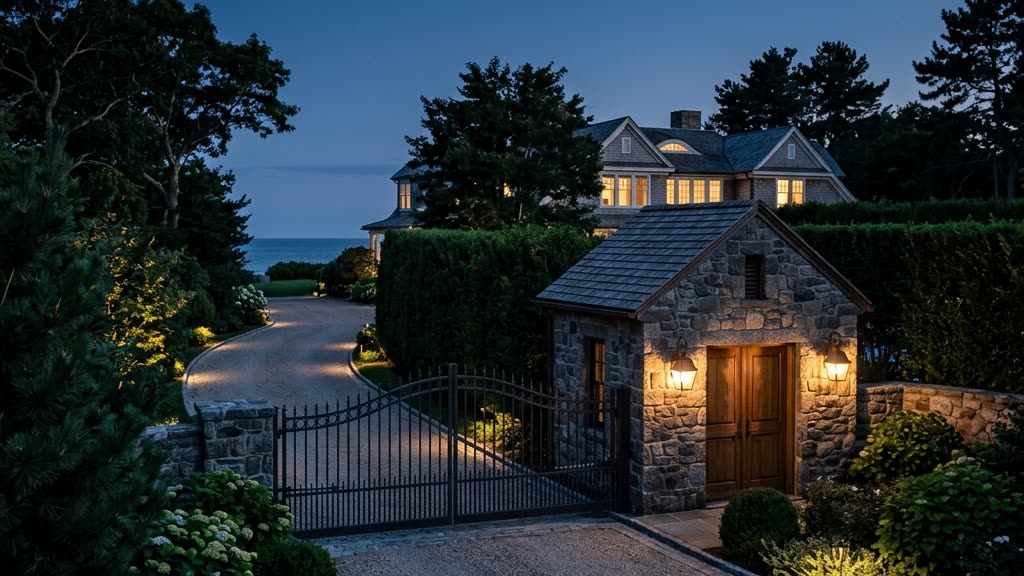
When a family asks me what luxury home security costs, they are usually hoping for a number they can write on the back of a card. I understand the impulse. After years spent assessing estates and running protective operations for high-net-worth families, I have learned that the honest answer is more useful than the quick one: luxury home security cost is not a single price, it is a set of decisions. Two homes on the same street, with the same square footage and the same insured value, can carry security budgets that differ by a wide margin, and both can be entirely correct. The difference lies in the threat model, the site, and the family’s tolerance for risk and for disruption to daily life.
What follows is how I think about the money, layer by layer, and how I steer clients away from the two most expensive mistakes I see: paying too little for a system that fails when it matters, and paying too much for equipment that flatters the invoice without improving safety.
Why Luxury Home Security Cost Resists a Single Number
There is no honest price sheet for protecting an estate, and anyone who hands you one on the first visit is selling hardware rather than security. The reason is simple. Cost follows risk and site, and both are unique to the property. A gated compound set back from the road with mature landscaping and long sightlines presents a very different problem than a glass-forward modern home on an open waterfront lot, where the water itself is an approach vector and the neighbors are close. A family with a public profile, frequent travel, and staff turnover carries different exposure than a quiet household that is rarely away.
So the first thing I tell people is that the number is downstream of an assessment, never upstream of it. If you want to understand what your protection will cost, the productive path is to understand what to expect from a security assessment before you ever discuss equipment. The assessment is where the real cost drivers surface. Everything after it is arithmetic.
The Cost Drivers, Layer by Layer
I think about estate security the way I was trained to think about protecting institutions and principals: in concentric layers, from the property line inward. The Cybersecurity and Infrastructure Security Agency describes this as defense in depth, and it is the right mental model here. The principle, laid out in plain terms at CISA (opens in a new tab), is that no single control should be load-bearing. Each layer buys time and information for the next. Cost accumulates the same way.
The Perimeter and the Grounds
The outermost layer is the least glamorous and often the most decisive. Fencing, gates, gate automation, landscaping that denies concealment, and exterior lighting designed for detection rather than decoration all live here. On larger properties this is frequently where the biggest single line items sit, because the ground is expensive to cover well. A long waterfront frontage or several acres of grounds costs more to secure than a compact urban lot, not because the equipment is fancier but because there is simply more distance to see across and control.
The Structure Itself
The next layer is the building envelope: exterior doors, their frames and hardware, window and glass treatments, and secure entry points for deliveries and staff. This is where I see the most quiet overspending and the most quiet underspending at the same time. Families will invest heavily in cameras while leaving a side door that a determined person could defeat in seconds. The structure is where dollars translate most directly into delay, and delay is the currency that matters when someone is trying to get in.
Detection and Surveillance
Sensors, cameras, and the network that carries their signal form the layer most people picture when they imagine a security system. The cost range here is enormous, and it is where the sales pressure is heaviest. Camera count, resolution, low-light performance, analytics, and how footage is stored and secured all move the number. I want to be direct about one common weak point: consumer cloud cameras. There are good reasons I have written elsewhere about why cloud cameras like Ring and Nest are the weak link on a serious estate. A camera that depends on a residential internet connection and a third-party account is a camera that can be blinded or bypassed. Spending real money on surveillance that rests on a fragile foundation is not economy, it is waste dressed as thrift.
This layer is also where network intrusion detection belongs, because a modern estate is a collection of connected devices, and each one is a door. Our veteran-owned team deploys and tunes GuardDog AI, an enterprise intrusion-detection platform for which we serve as the exclusive reseller partner. It watches the devices and traffic that a traditional alarm never sees. You can read more about how we integrate it on the GuardDog page. The point for budgeting is that the digital perimeter is now a real line item, not an afterthought, and pretending otherwise is how families end up exposed.
Monitoring and Response
Hardware without a human plan is theater. This layer covers professional monitoring, verified response, and the coordination with local law enforcement and private response that turns an alarm into an outcome. Some of this is recurring rather than one-time, and I will come back to that, because the ongoing cost is where families are most often surprised.
The Human Layer
At the top of the pyramid sits protocol and people: household staff vetting, access control discipline, travel routines, and, for some families, standing or on-call protective personnel. This layer is frequently the smallest capital expense and the largest determinant of whether the rest of the investment performs. The best-engineered system in the world fails if a staff member props a gate or reuses a code.
The Two Traps: Cheap and Gold-Plated
Almost every mistake I am asked to fix falls into one of two categories.
The Cheap Trap
The cheap trap looks like savings and behaves like exposure. It is the consumer-grade kit sold with a monthly app subscription, installed by someone who never walked the grounds at night or considered the approach from the water. It photographs well and reassures the family until the evening it is tested, at which point everyone learns which corners were cut. The false economy is rarely in the headline price. It is in the response that never comes, the blind spot no one mapped, and the footage that was stored somewhere it could be reached. When you see how a professional evaluates a property, in the piece I linked above on the assessment, the gaps in a bargain installation become obvious.
The Gold-Plated Trap
The gold-plated trap is subtler and, in my experience, more common among affluent buyers. It is the temptation to solve a security problem by spending until it feels solved. More cameras than anyone will ever review. A command room that impresses guests and confuses the household. Redundancies stacked on the visible layers while a basic perimeter gap goes unaddressed. Gold-plating is comfortable because writing the check feels like taking action. But security is not a function of dollars deployed, it is a function of the right dollars deployed in the right sequence. I have walked into homes with breathtaking equipment budgets and elementary vulnerabilities, and the fix cost a fraction of what the owner had already spent.
What Actually Moves the Number
If you want to forecast your own luxury home security cost with any accuracy, watch these variables. Site scale and geometry: acreage, frontage, water access, and sightlines. Existing construction: whether doors, windows, and gates can be hardened or must be replaced. Threat profile: public visibility, travel patterns, and household size. Integration complexity: how many systems must talk to each other, and how much legacy equipment has to be retired. And the split between one-time capital and recurring service, which includes monitoring, maintenance, software, and any personnel.
One more factor rarely gets discussed until renewal season: insurance. Well-documented, professionally installed security can affect how insurers view a high-value home, and the Insurance Information Institute at III (opens in a new tab) is a sober reference for how protection and coverage interact. I mention it not as a selling point but because a serious system is part of a family’s broader financial and risk picture, not a standalone gadget purchase.
How to Buy Without Overpaying
The families who spend wisely tend to do three things. They start with an independent assessment rather than a product demo. They interview more than one firm and compare methodology, not just price, which is exactly what a thoughtful guide to choosing a security company is for. And they come to the table prepared, which is why I encourage every client to review the questions to ask a security installer before signing anything. A good provider will welcome hard questions. A weak one will steer you back to the brochure.
Read the contract with the same care you would give any significant agreement. The Federal Trade Commission at FTC (opens in a new tab) offers plain guidance on service contracts and cancellation terms, and long monitoring commitments deserve scrutiny. If you are securing an estate in a community like Port Royal or elsewhere along the coast, the local landscape matters too, which is why our broader guidance on luxury home security in Florida treats climate, waterfront exposure, and regional response as first-class design inputs rather than footnotes.
Frequently Asked Questions
Is there a realistic starting budget for luxury home security?
There is a floor below which the work cannot be done credibly on an estate, but it is defined by the site rather than by a catalog. Rather than anchor on a figure, I encourage families to commission an assessment first and let the property tell you what it needs. The assessment itself is a modest, bounded expense and it prevents far larger misallocations later.
Does more expensive equipment mean better protection?
No, and believing it does is the single most reliable way to overspend. Protection comes from the right layers, correctly sequenced and properly maintained, with a response plan behind them. I have seen very large equipment budgets undone by a single unaddressed entry point. Sequence and integration beat sticker price every time.
How much of the cost is one-time versus ongoing?
Expect both. Hardware, hardening, and installation are largely one-time. Monitoring, software, maintenance, network intrusion detection, and any personnel are recurring. Families are most often surprised by the ongoing side, so ask any provider to separate capital from service clearly before you commit.
Can I phase the investment over time?
Yes, and for many estates that is the disciplined approach. A proper assessment produces a prioritized roadmap, so you can address the load-bearing gaps first, usually the perimeter and the structure, then extend detection, monitoring, and the human layer as budget allows. Phasing done well is not cutting corners, it is spending in the order that buys the most safety per dollar.
The most valuable thing I can offer is not a price, it is clarity about what your specific property actually requires and what it does not. If you would like a candid, discreet evaluation of your estate and a straight answer about where your money should and should not go, request a private consultation or call us at (239) 710-1772. We will walk your grounds, listen to your concerns, and give you an honest map before you spend a dollar on hardware.