
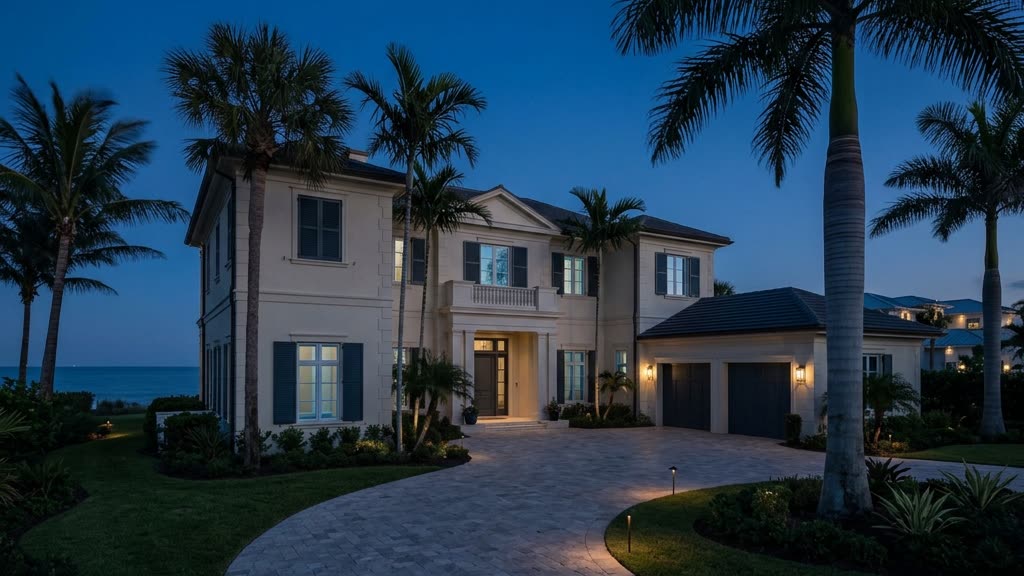
Every autumn I watch a particular kind of house go quiet. The owners close it up, forward the mail, and fly north, trusting that a locked door and a yard sign will hold the line until spring. Snowbird home security is its own discipline, and it is not the same as securing a house you sleep in every night. A residence that sits empty for five or six months presents a fundamentally different problem: the absence itself is the vulnerability, and everyone from an opportunistic burglar to a slow water leak has months to work uninterrupted.
I have spent my career assessing estates and running protective operations for high-net-worth families, and the seasonal home is where I see the most avoidable loss. Not because these owners are careless, but because the risks of an empty house are quiet ones. They do not announce themselves. By the time anyone notices, the damage has been compounding for weeks. What follows is the checklist I walk clients through before they leave, organized the way I actually think about it: detection, human oversight, the appearance of occupancy, and the insurance duties that quietly govern whether you are covered at all.
Why an Empty Estate Is a Different Risk Profile
An occupied home corrects its own small failures. Someone hears the drip, smells the mildew, notices the side gate ajar, resets the tripped breaker. An empty home has none of that. Every minor fault runs to completion. Law enforcement has long documented that burglars prefer unoccupied homes and often study a property before entering, watching for the patterns that betray a long absence: uncollected packages, a mailbox stuffed full, landscaping that never changes, the same lights on the same timer night after night.
The threats sort into three broad families. There is human intrusion, the one owners fixate on. There is environmental failure, which in Florida means water, humidity, and mold, and which quietly causes a large share of seasonal-home claims. And there is systems failure: the dead battery, the dropped internet connection, the camera that has been offline for a month while you believed it was recording. A serious plan addresses all three, because a house lost to a burst supply line is just as gone as one lost to a break-in.
Detection That Actually Reaches You
Monitoring that survives an outage
The cameras and alarm most owners rely on share a single point of failure: they assume the power and the internet stay on. In Florida, across a six-month absence, neither assumption is safe. A brief outage during a storm can take your entire monitoring picture dark, and you will not know it happened. This is why I treat power and connectivity as security systems in their own right. Battery backup on the network stack and a cellular failover path keep detection alive when the grid does not, and I have written separately about building outage-proof security with battery storage for exactly this reason.
Layered sensing, not just cameras
Cameras tell you what already happened. I want to know before that. Motion sensing at the perimeter, door and window contacts, glass-break detection, and water and humidity sensors on every level give you warning rather than a recording of your loss. For clients with real exposure, we deploy and tune GuardDog AI, a third-party enterprise intrusion-detection platform that SDVOSB integrates as its exclusive reseller partner. It watches the network layer, the part of the estate most homeowners never think about, where a compromised camera or smart lock can quietly become a way in. You can read more about how we deploy GuardDog for residential clients. The point is never any single device. It is overlapping coverage, so that no one failure blinds the whole system.
The Caretaker Question
Technology tells you something is wrong. It cannot turn off a water main, meet the fire department, or walk the property after a storm. Someone has to. The most disciplined snowbird plans I have seen all share one feature: a named, trusted human being with keys, a checklist, and a schedule.
That person may be a professional property manager, a security firm running scheduled patrols, or a genuinely reliable neighbor. What matters is that the arrangement is explicit. Vague promises to keep an eye on the place are worth nothing when a pipe fails in February. I ask clients to put the caretaker relationship in writing: how often the interior is physically walked, who they call and in what order, and what authority they have to act. A caretaker who can enter, assess, and authorize an emergency plumber has stopped a catastrophe. One who can only call you in a different time zone has merely documented it.
Be deliberate about keys and codes as well. Every person with access is part of your risk picture. Use unique alarm codes per individual so entries are attributable, change them when a relationship ends, and never hide a physical key outside. Burglars know every hiding spot you do.
Occupancy Simulation Done Properly
The goal of occupancy simulation is simple: make a watched, empty house look lived-in to anyone studying it from the street. Done badly, it does the opposite. A single lamp on a mechanical timer clicking on at exactly 7:00 every evening for five months is a signal, not a disguise.
Real simulation is varied and irregular. Modern smart-lighting systems can randomize interior lights across rooms on a natural evening schedule. Motorized shades that move during the day, a car left in the driveway, landscaping and pool service that continue on their normal cadence, and mail and package handling that never lets deliveries accumulate all reinforce the impression that someone is home. The details that give away an empty house are mundane, and so are the fixes. Keep the lawn cut. Keep the bins going out and coming back. Let the rhythm of the property look unchanged.
Your Insurance Duties, and the Fine Print That Governs Coverage
Here is the part owners skip, and it is the one that can turn a covered loss into a denied claim. Most homeowner and high-value policies contain conditions tied to vacancy and to your duty to maintain the property. A home left unoccupied beyond a defined stretch, often a matter of weeks rather than months, may fall outside standard coverage unless you have arranged a vacancy endorsement or a specific rider. Many policies also require reasonable steps to prevent foreseeable damage: maintaining heat or humidity control, shutting off water, or keeping a monitored alarm active.
I am not your agent, and I do not give coverage advice. What I tell every seasonal client is to call the person who is, before they leave, and ask three plain questions. Does my policy have a vacancy or unoccupancy clause, and at how many days does it trigger? What am I required to do while the home is empty to keep coverage intact? And will documented monitoring or a caretaker schedule change my terms or my premium? The Insurance Information Institute (opens in a new tab) publishes clear, plain-language guidance on how vacancy affects coverage, and it is worth reading before that call. Get the answers in writing. A monitored alarm and a written maintenance log are not just security measures. They are often the evidence that keeps a claim alive.
Florida Adds Its Own Chapter
If your seasonal home is in Florida, the calendar does much of your planning for you. The months these houses sit empty overlap the state’s storm season almost exactly. A plan that ignores that is not a plan. Every departure checklist I write for a Gulf or Atlantic coast estate accounts for wind, water, and the loss of power that follows a serious system, and I have laid out the full approach in a guide to hurricane season security continuity.
The essentials: know your shutter or impact-glass plan and who executes it when you are a thousand miles away, keep gutters and drainage clear, and confirm that your backup power actually carries the security load and not just a single light. The state’s own emergency management resources (opens in a new tab) are a sound starting point for the storm side, and Ready.gov (opens in a new tab) offers a straightforward framework for the rest. For the wider picture of protecting a seasonal property here, our Florida estate security guide and the broader work on luxury home security in Florida go deeper than a single checklist can. Owners in the coastal enclaves I work in most, from the barrier islands to Boca Raton, face this same seasonal exposure and the same solutions.
The Departure Checklist
Before you lock up for the season, walk this list:
- Confirm every camera, sensor, and alarm zone is online and reporting, then verify the monitoring center has current contact and dispatch instructions.
- Install or test battery backup and cellular failover so an outage cannot silently blind your system.
- Shut off the main water supply, or install automatic leak-detection valves, and drain what should be drained.
- Set interior temperature and humidity to protect the home against mold, and place sensors that alert you if either drifts.
- Program varied, randomized lighting and shades. Retire the single-timer lamp.
- Name a caretaker in writing, with a walk schedule, a call order, and the authority to act in an emergency.
- Stop or forward the mail, and arrange for packages, so nothing accumulates at the door.
- Photograph the property and its contents, and store the record off-site, for both claims and recovery.
- Call your insurer, confirm your vacancy terms, and get your duties in writing.
- Reduce your digital footprint: no social posts announcing the move north, and secure the home network the same way you secure the doors.
Frequently Asked Questions
How long can I leave my home empty before my insurance is affected?
It depends entirely on your policy, but many treat a home as vacant after a stretch commonly measured in weeks rather than months, after which standard coverage can narrow or lapse. Because a snowbird season runs far longer than that, this is the single most important call to make before you leave. Ask your agent for the exact trigger and what a vacancy endorsement would require.
Are cloud cameras enough to watch an empty house?
On their own, no. Consumer cloud cameras depend on continuous power and internet, and both are fragile across a Florida storm season. They also record loss rather than prevent it. Treat them as one layer inside a monitored system with battery backup, cellular failover, and sensing that warns you before entry, not after.
Do I really need a caretaker if I have a full alarm system?
Yes. A system detects. It cannot shut a valve, meet responders, or assess damage after a storm. A named, trusted person who can physically enter and act is the difference between an alert and a resolution. The technology and the human are not alternatives. They work together.
What is the most common way snowbird homes are lost?
Not the dramatic break-in most owners picture. Quiet environmental failures, water intrusion and mold especially, account for a meaningful share of seasonal-home damage precisely because no one is present to catch them early. That is why detection, humidity control, and a caretaker matter as much as locks and cameras.
A seasonal home should be a place you return to with anticipation, not apprehension. The families who close up in the fall and walk back through the same clean, dry, secure front door in spring are not lucky. They planned. If you would like a private assessment of your own property before this season, our veteran-owned team is glad to help. You can request a private consultation or reach us directly at (239) 710-1772.