
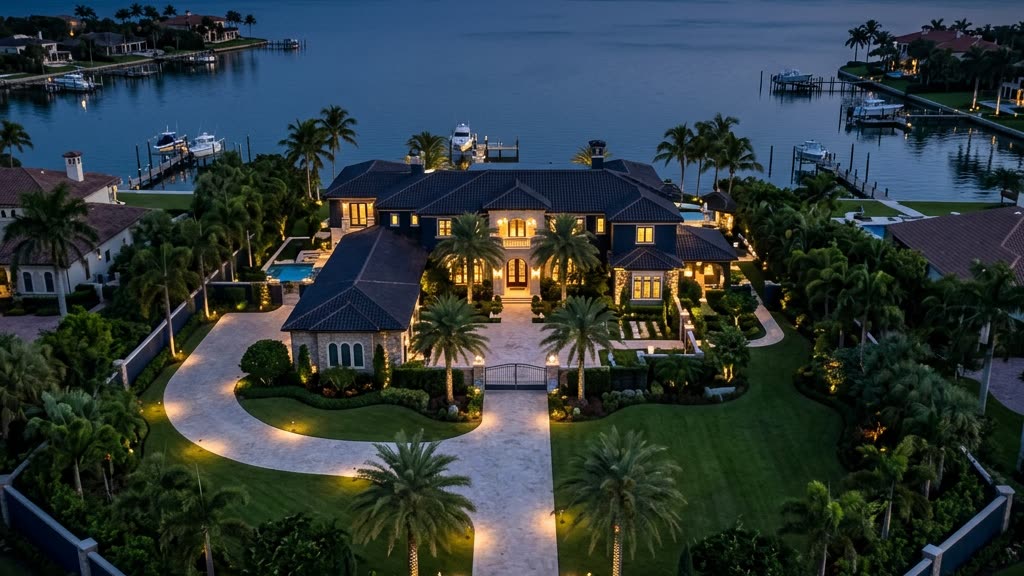
Every estate assessment I run begins at the same place: the property line, not the front door. By the time someone is testing your entry hardware, most of your good options are already behind you. A sound approach to perimeter security home planning starts from the opposite assumption. The ground you own outside the walls is the ground where an incident should be seen, slowed, and resolved. The house itself is the last layer of protection, never the first.
I have spent my career building and running protective operations, from executive security programs to the physical infrastructure that guards sensitive institutions. The lesson that carries across all of it is simple to state and difficult to execute well: you win at the edge. A property that is only hardened at the doors and windows is a property that has surrendered its distance, and distance is the single most valuable asset a homeowner has. This piece lays out how I think about layered perimeter security home strategy, from the boundary inward, so that detection happens early, delay is engineered on purpose, and response arrives while it still matters.
Why the Perimeter Decides the Outcome
Most residential security failures are not technology failures. They are timing failures. An intruder needs a window of unobserved time to approach, defeat a barrier, enter, and leave. Everything you build on the property is either giving that person time or taking it away.
When protection is concentrated at the structure, you have handed over the entire approach for free. A person can walk your grounds, study your routines, test a gate, and reach a wall before any system registers a problem. The federal government’s own approach to protecting critical facilities is built on layered defense for exactly this reason, and the Cybersecurity and Infrastructure Security Agency (opens in a new tab) has published extensively on why single points of protection fail and why depth is what actually holds. The same principle that protects a data center or a power substation protects a private estate. You are buying time and observation in exchange for the intruder’s confidence.
Property crime data reported by the FBI (opens in a new tab) has long shown that most residential intrusions favor speed and low visibility. Offenders want to be in and out quickly, and they avoid targets where they feel seen or slowed. A layered perimeter attacks both of those preferences at once. It makes the approach visible, and it makes progress slow enough that the risk stops being worth it.
The Layer System, From Property Line to Front Door
I describe estate protection as a series of concentric layers, each with one job. Think of it as three questions moving inward: Can I see them coming? Can I slow them down? Can I get help there in time? Every layer should answer one of those, and the layers should reinforce one another rather than duplicate effort.
Layer One: The Boundary
The outermost layer is the property line itself, defined by wall, fence, hedge, water, or some combination. Its purpose is twofold. It communicates that the property is defined, maintained, and attended, which deters the casual opportunist. And it establishes the first detection line, the point where an approach should register before anyone is close to the house.
A boundary that only looks decorative is doing half its work. The best perimeters combine a physical barrier with quiet detection, so that a climb, a cut, or a breach at the line is known immediately rather than discovered later on a recording. I care less about how tall a wall is and more about whether crossing it generates a signal. Height alone buys you seconds. A wall that reports being touched buys you the whole response window.
Layer Two: The Grounds
Inside the boundary sits the approach: the driveway, the landscaping, the pathways, the outbuildings, the space between the line and the structure. This is your delay-and-track zone, and on a true estate it is often the most valuable real estate you have for security because it is large. A long, controlled approach is a gift. It gives detection systems time to confirm, it gives responders time to move, and it gives you time to make decisions.
Two elements govern this layer more than any other. The first is vehicular and pedestrian access control, because the driveway is the single most common legitimate path onto the property and therefore the most common exploited one. How you handle gates, call-boxes, credentials, and the sequence a visitor moves through determines whether the grounds are a filter or a freeway. I go deep on this in a separate field note on driveway gates and access control, and I would treat it as required reading alongside this one, because access control is where the layer system either holds or leaks.
The second element is light. A property can have excellent cameras and still be effectively blind, because a camera only sees what the light allows. Purposeful security lighting design is not about flooding the grounds with glare. It is about shaping shadow, eliminating the dark seams intruders rely on, and giving both the human eye and the sensor a clean picture of the approach. Lighting and detection are partners. Neither performs to its potential without the other.
Layer Three: The Structure and Entry Points
Only at the innermost layer do we reach the building itself: the doors, windows, garage, and the transition points where the grounds meet the walls. This is the respond layer, the last line, and it should almost never be where an incident is first detected. If your first alert comes from a door contact, your outer layers have already been beaten and your response window has already collapsed.
Hardened entry hardware, laminated glass, monitored contacts, and interior detection all belong here, and they matter. But their job is to be the final delay while help closes the distance, not to carry the whole burden of the property. When I find an estate where the entire security budget went into the front door, I know the owner has been sold hardware instead of a system.
Detect Early
Detection is the layer that makes every other layer worth having, because delay is only useful if someone knows the clock has started. Early detection means the outermost layer that is crossed is the one that raises the alarm, giving you the maximum amount of the intruder’s time to work with.
This is where modern technology earns its place, provided it is deployed with discipline. Cameras are necessary but they are not, on their own, a detection system. A wall of recorded feeds that nobody is watching is an investigative tool, not a preventive one. I am also candid with clients about the limits of consumer devices, which is why I wrote a separate note on why cloud cameras like Ring and Nest are the weak link on properties that actually warrant protection. Consumer gear is built for convenience and for a suburban lot, not for a defended estate.
On the properties we protect, we deploy and tune an enterprise intrusion-detection platform called GuardDog AI. It is a third-party system, and our team serves as its exclusive reseller partner, which means we integrate it, tune it to the specific geometry of a property, and fold its alerts into the wider response plan rather than simply bolting a box to the wall. The value is not the device itself. The value is a detection line that watches the network and the environment intelligently and tells the right people about a problem while that problem is still at the boundary, not at the door.
Delay Long
Delay is the most underappreciated principle in residential security, because it is invisible when it works. Every barrier, every gate sequence, every stretch of open, well-lit ground is a deposit of time into your response account. The goal of the layer system is to make the total delay across all layers longer than the time it takes for a response to arrive and resolve the situation.
Delay is also where design and security stop being in tension. A gracious, gated approach, mature landscaping that removes concealment near the walls, and a considered lighting scheme all read as beauty to a guest and as friction to an intruder. Nothing about a well-defended estate needs to look like a compound. The Insurance Information Institute (opens in a new tab) has long noted that visible, well-maintained deterrents shift risk, and on an estate the most effective deterrents are frequently the ones that also look like careful stewardship of the property. Good perimeter security home design is quiet by nature.
Respond Fast
Detection and delay exist to serve response. A layer system that reliably sees an approach and slows it, but has no credible answer to the question of who arrives and how quickly, is an alarm without a plan. Response is the human element, and on a private estate it usually means a defined chain: who is notified, in what order, what they are authorized to do, and how the property’s own systems support them once they are moving.
This is the part of an assessment where I spend the most time, because it cannot be bought off a shelf. It depends on the property, the family, the local resources, and the routines of the household. The technology on the perimeter should feed the response, handing responders a confirmed location, a clear picture, and a defended set of internal layers still standing between the threat and the people inside. The families we work with, through our veteran-owned team at SDVOSB.services, tend to value this last piece the most, because it is the difference between an alert and an outcome.
The Estate Context
Layered perimeter security is not a template you stamp onto every lot. It has to be fitted. A waterfront property with a seawall has a different boundary problem than a gated inland estate. A long single-approach drive is a different challenge than multiple service entrances. In enclaves like Port Royal, where properties sit close, share sight lines, and carry real value, the design work is about tailoring the layers to the specific geometry and the specific risks rather than reaching for a standard package.
If you want the wider strategic picture of how these layers fit into a complete protection program, our overview of luxury home security in Florida is the pillar that ties the perimeter work together with everything that happens inside the walls. This field note is the perimeter chapter of that larger story.
Frequently Asked Questions
How far out should perimeter security actually start?
At the property line, always. The purpose of the outer layer is to detect an approach before it becomes an intrusion, and that is only possible if your first detection point is at the boundary rather than at the building. On a large estate, the space between the line and the house is your greatest advantage. Starting protection at the door throws that advantage away.
Do walls and fences really stop a determined intruder?
No single barrier stops a determined person, and I would be suspicious of anyone who tells you otherwise. A wall does not exist to be unclimbable. It exists to define the boundary, to deter the opportunist, and to serve as the first detection line so that crossing it generates a signal. Its job is delay and notification, and it performs that job as part of a layered system, not alone.
Will a layered perimeter make my home feel like a fortress?
It should not, and if it does, it was designed poorly. The most effective perimeters read as careful stewardship of the property. Gracious gates, mature planting that happens to remove concealment, and considered lighting all look like beauty to a guest and function as friction to an intruder. Discretion is a feature of good estate security, not a compromise of it.
How does a platform like GuardDog AI fit into the layers?
It strengthens the detection layer. GuardDog AI is an enterprise intrusion-detection platform that we deploy, integrate, and tune to a property, and it lets the perimeter register a problem intelligently and early. The technology is one component. The value comes from folding its alerts into the delay and response layers so that a signal at the boundary becomes an informed, timely response rather than just another notification.
Perimeter security is won at the edge and lost at the door, and the difference between those two outcomes is almost always the quality of the layers in between. If you would like a considered assessment of your property, from the boundary inward, you can request a private consultation or reach our team directly at (239) 710-1772. We will walk your grounds the way an intruder would, and then we will make sure that walk is a great deal harder than it is today.