
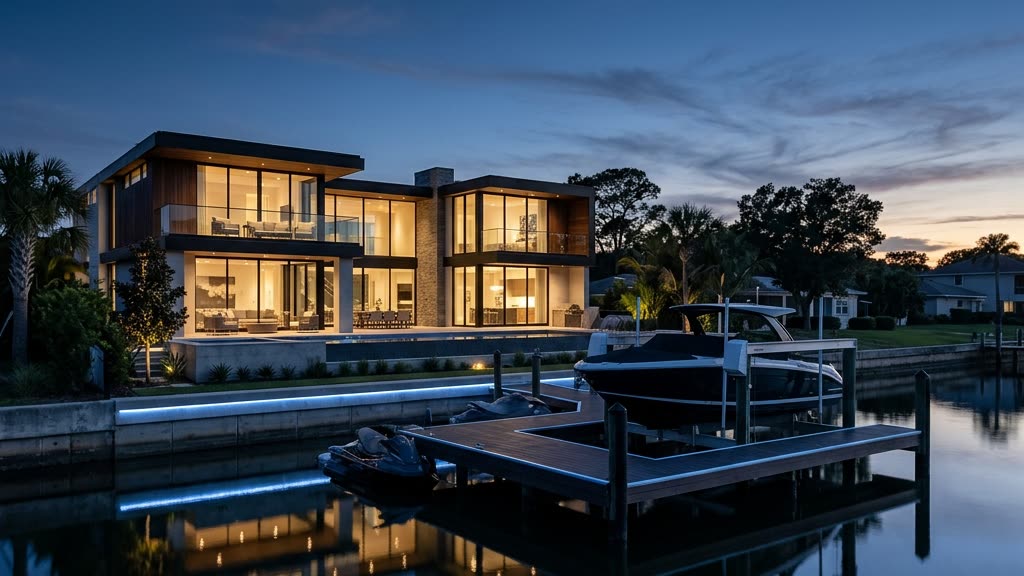
Most estates I assess treat the street as the threat and the water as the view. That instinct is understandable, and it is backward. On a waterfront property, the dock and the seawall function as a second front door, and it is usually the one nobody thinks to lock. Serious waterfront home security has to start from that admission, because a person who arrives by water bypasses your gate, your driveway camera, and the neighbor who would have noticed an unfamiliar vehicle idling at the curb. He steps onto your property from the exact direction you designed for pleasure rather than protection.
I have spent my career building protective operations for families and institutions that could not afford to guess, and the pattern on the water is consistent. The landside of these homes is often hardened well. Cameras at the gate, motion lighting along the drive, reinforced entry doors. Then you walk to the back of the property and find an open invitation: a floating dock, a boat lift, a dark stretch of seawall, and not a single sensor between the water and the family room. This piece is about closing that gap without turning your waterfront into a fortress you no longer enjoy.
The Water Is a Front Door, So Treat It Like One
The mental shift I ask clients to make is simple. Stop thinking of the waterline as a boundary and start thinking of it as an entrance. An entrance has a threshold, a lock, and someone who knows when it opens. Your seawall has none of those by default.
Approach by water carries advantages for the wrong person. It is quiet. A kayak, a paddleboard, or a small skiff with the motor cut produces almost no sound and no headlights. It is unobserved. Waterways at night are dark and unmonitored in a way that streets are not. And it is deniable. A figure on the water reads as a fisherman or a neighbor until the moment he is standing on your dock, and by then the advantage is entirely his.
The FBI (opens in a new tab) and other agencies have documented for years that offenders favor the path of least resistance and least visibility. On a canal or an open-water lot, the water is that path. The goal of waterfront home security is not to make the approach impossible. It is to make sure the approach is seen, announced, and slowed long enough for a response to matter.
Reading the Approach From the Water
Before any hardware goes in, I walk the property from the water back toward the house, because that is the route that matters. Standing on your own dock and looking at your home the way an intruder would tells you more than any brochure.
Sightlines and the seawall
I look at where a person could stand unseen. Mature landscaping that screens you from the neighbors also screens an intruder from everyone. Boathouses, covered lifts, and dense mangrove edges create pockets of full concealment right at the point of entry. The first correction is often not a gadget. It is trimming a sightline, relocating a light, or removing the visual dead zone where someone could work a lock or wait for the house to go quiet.
Where a boat can actually land
Not every foot of seawall is a viable landing. I map the two or three places where a small craft could realistically tie off or a swimmer could pull up: the swim ladder, the low point of the dock, the boat lift cradle when it is down. Those become the priority zones. Concentrating detection where landing is physically possible is far more effective than ringing the entire waterline with sensors that cry wolf every time a wake rolls in.
Layering Detection Along the Dock
Detection on the water has to tolerate an environment that defeats ordinary residential gear. Salt, humidity, wind, boat wakes, and the constant motion of water and wildlife will overwhelm a cheap motion sensor within a season. The design principle I follow is layered detection: several independent methods that each cover the others’ blind spots, so that a single false positive does not train the family to ignore the system.
Approach and perimeter sensors
At the dock itself I favor a combination of beam-break sensors across the gangway or the top of the dock steps, marine-rated motion detection aimed down the walking surfaces rather than out at the open water, and contact or vibration sensors on gates and lift controls. The aim is to catch the transition from water to land, the threshold moment, rather than to police the whole canal. A break at the gangway at two in the morning is an unambiguous event. Motion two hundred feet out on the water is not.
This waterside layer should never stand alone. It belongs inside the same framework as your estate perimeter security layers, so that a trip on the dock escalates in step with the rest of the property rather than as an isolated chime nobody hears.
Where a tuned intrusion platform earns its place
Sensors generate signals. What separates a real security posture from a pile of alarms is what interprets those signals and decides what deserves a human response. For clients who want that discipline on the water, our team deploys GuardDog AI, a third-party enterprise intrusion-detection platform that we integrate and tune to the specific property. It is not something we built, and I will not pretend otherwise. Our value is in the deployment: correlating the dock sensors with the wider network, suppressing the nuisance alerts that come with a marine environment, and making sure a genuine approach surfaces clearly instead of drowning in noise. You can read more about how we work with that platform on our GuardDog page.
Boat Lift and Dock Discipline
Some of the most effective waterfront home security costs nothing and installs no hardware. It is discipline, and it is the part clients most often overlook.
A boat left in the down position on the lift is a platform and a step stool. Raised, it is neither. Making it routine to raise the lift when the vessel is out, and to raise an empty cradle at night, removes a ready-made staging point at the waterline. Dock boxes should lock, because the gaff, the boat hook, and the tools inside them are exactly what an opportunist would use on a door or a window. Swim ladders should come up at night. Fenders, lines, and anything that helps a person climb out of the water and onto your structure should be stowed rather than left hanging.
I also counsel families on the human signals they broadcast without realizing it. A vessel that is always gone on the same days, a dock that goes dark at a predictable hour, gate codes shared casually with the pressure-washing crew and the dock cleaner: these are the patterns a patient observer collects. Rotating routines and limiting who holds waterside access are free, and they close vulnerabilities no sensor can.
Integrating the Waterside With the Whole Estate
The dock is one face of the property, and it has to answer to the same standard as every other face. The reinforced approach at the water means little if the door it protects is a sliding glass panel with a builder-grade latch. On most waterfront homes, the wall facing the water is mostly glass, which is why I treat the waterside and the openings behind it as a single problem. This is where security glazing and window film and serious door hardware and locks that matter carry the load once someone is standing on your patio.
Layer it honestly, from the water inward. Detection at the seawall and dock. Deterrence and delay across the lawn and lighting. Hardened glazing and hardware at the actual openings. Then interior monitoring as the final catch. This layered model is the same principle that federal physical-security guidance, including resources from CISA (opens in a new tab), applies to protecting any facility. Each layer buys time, and time is the only thing that converts a silent approach into a response. This is the same philosophy behind luxury home security in Florida that we apply to every waterfront estate, because the water demands it more than any street ever will.
For families along the canals and Intracoastal stretches of Boca Raton and the surrounding coast, the waterside exposure is not an edge case. It is the defining feature of the property and deserves to be treated as such.
Lighting and Cameras, and Their Limits
Light is a genuine deterrent, and the waterline is where it is most often neglected. Even, glare-free lighting along the seawall and dock removes the concealment an approach depends on. I prefer warm, shielded fixtures that light the walking surfaces and the transition points without blinding your own cameras or ruining the view you paid for.
Cameras matter too, but I set expectations plainly. Over water, a camera relying on consumer cloud infrastructure and a single home network is a fragile witness. Salt fog, glare off the water, and connections that drop at the worst moment all conspire against it. I have written before about why cloud cameras like Ring and Nest are the weak link, and nowhere is that truer than on the water. Cameras belong in the design, but as one confirming layer, never as the entire waterside plan.
Frequently Asked Questions
Do I really need sensors on the dock if I already have cameras at the gate?
Yes. Gate cameras watch the landside approach and do nothing for someone who arrives by water. The dock and seawall are a separate avenue that has to be covered on its own terms, because the person using it never passes your gate at all.
Will marine-grade sensors constantly false-alarm from wakes and wildlife?
They can, if the system is chosen and aimed poorly. The solution is layered detection focused on the landing points and the water-to-land threshold rather than the open water, paired with a platform tuned to suppress the routine motion of a marine environment. Done properly, the family learns to trust the alarm because it rarely lies.
What can I do tonight, before any installation?
Raise the boat lift, lock the dock boxes, pull up the swim ladder, and stow anything that helps a person climb out of the water. Turn on or add light at the seawall. None of it requires hardware, and all of it removes the easy staging points at the waterline.
Is a waterfront system visible and intrusive?
It does not have to be. Good waterside security is mostly invisible: shielded lighting, discreet sensors at the thresholds, and hardware that reads as ordinary. The point is to protect the property without surrendering the reason you bought a home on the water in the first place.
The water is the most beautiful part of your property and the least defended. Closing that gap is careful, quiet work, and it is the kind our veteran-owned team does every week for families who want the view without the exposure. If you would like an honest assessment of how your waterfront actually reads from the seawall in, I invite you to request a private consultation or call us directly at (239) 710-1772.