
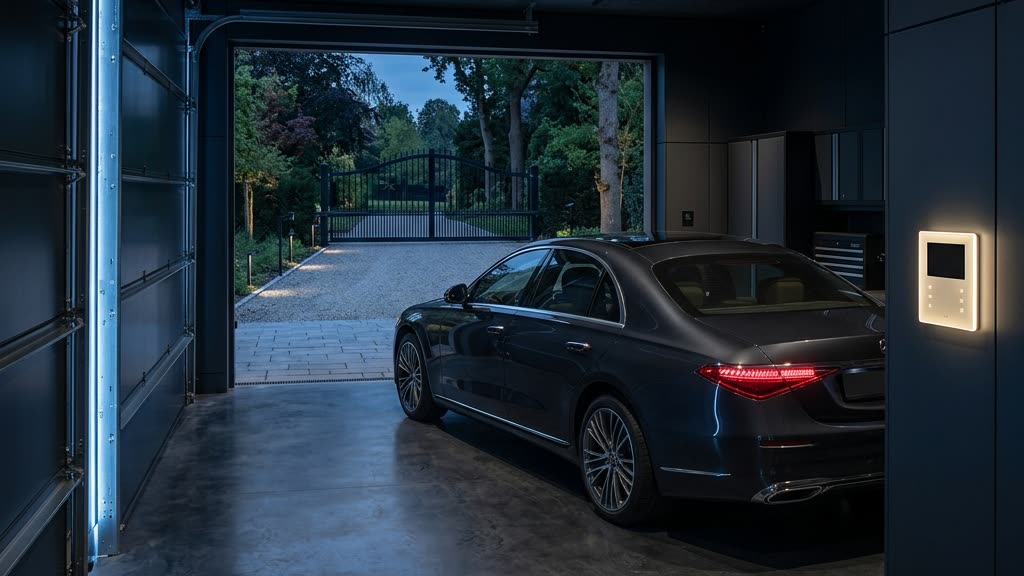
A luxury vehicle parked in the driveway of a Florida estate is one of the most exposed assets a family owns. It is valuable, mobile, and often defended by less than the watch on the owner’s wrist. In two decades of assessing estates and running protective operations for high-net-worth families, I have watched luxury car security fall into the gap between the home alarm and the insurance policy, treated as someone else’s concern right up until the car is gone. It is rarely someone else’s concern. The vehicle is frequently the softest, most portable, and most quickly liquidated target on a property worth many times its value.
The good news is that the failure points are predictable. Thieves who target high-value cars are not improvising. They work a repeatable method, and a repeatable method can be interrupted at several points. What follows is how these crews actually operate now, and how I approach the three places where an estate wins or loses this fight: the garage, the driveway, and the recovery plan you build before anything happens.
The theft has changed: relay attacks and keyless entry
The keyless convenience that defines a modern luxury car is also its central vulnerability. Most premium vehicles use a proximity fob that talks to the car over a short-range radio signal. When the car senses the fob nearby, it unlocks and allows a start. The fob does not need to leave your pocket, and that is precisely the problem.
What a relay attack looks like
A relay attack typically uses two people and two pieces of inexpensive equipment. One person stands near the house, close to where the fob usually sits: a hall table, a kitchen counter, a hook by the door. That person’s device captures the fob’s signal through the wall and boosts it. The second person stands at the vehicle with a receiver that rebroadcasts the signal to the car. The car believes the key is present, unlocks, and starts. The whole sequence can take less time than it takes to describe it, and it makes no noise. Law enforcement and the National Highway Traffic Safety Administration have documented the steady rise of these keyless thefts, and the pattern is consistent across the country: quiet, fast, and gone before anyone stirs. You can review the federal guidance on vehicle theft prevention at NHTSA (opens in a new tab).
The defense here is not exotic. It is signal control. A fob kept in a faraday pouch or a lined signal-blocking box cannot be reached through the wall. I ask families to store keys away from exterior walls and windows, and to treat the fob the way they treat any other high-value small object that needs a secure home. If you already think in terms of a proper home safe for cash, documents, and valuables, extend that same discipline to the thing that starts a six-figure car.
Beyond the fob: direct electronic entry
More sophisticated crews have moved past the fob entirely. Some now access the vehicle’s internal network directly, often through a wiring point behind a headlight or bumper, and inject commands that unlock and start the car without ever touching a key. This is a different order of threat, and it is one reason I never tell a client that a single measure solves luxury car security. If a determined crew can bypass the key, then the value of a locked garage door, a physical steering barrier, and an independent tracker rises sharply. The lesson from the professional side of my work applies cleanly here: assume any one layer can fail, and build so that the next layer still holds.
The garage: treat it as a security zone, not a parking spot
Most people think of the garage as storage. I think of it as the innermost ring of protection for the vehicle, and I assess it the way I assess a safe room. A car that sleeps inside a hardened garage is far harder to reach, far harder to remove, and far more likely to trigger a response before it is lost.
Physical layers
Start with the door itself. A quality sectional garage door, properly maintained, with the emergency release secured against the coat-hanger trick that lets an intruder pop the release from outside, closes off the most common quiet entry. Inside, I favor a physical deterrent on the vehicle: a visible steering or pedal lock, or a ground anchor for the most valuable cars. These are not glamorous, and clients sometimes resist them. But a thief working a keyless bypass expects to drive away in seconds, and a physical barrier that forces cutting, prying, and time is exactly the friction that sends a professional to an easier target down the street.
Detection, lighting, and eyes that actually watch
Cameras that record are useful after the fact. Systems that detect and alert in real time are what change outcomes. Lighting on motion, sensors on the garage door and the pedestrian door, and a monitoring posture that treats the garage as part of the home’s alarmed envelope all matter more than another camera nobody watches. For estates that want detection on the network side as well, we deploy and tune GuardDog AI, an enterprise intrusion-detection platform, to watch for the electronic reconnaissance and device activity that often precedes a keyless theft. To be clear about what that is: GuardDog is a third-party system that our team integrates and configures, not something we built. Cameras and cloud doorbells alone are a weak spine for a property at this level, a point I have made before in detail on why consumer cloud cameras are the weak link.
The garage does not stand alone. It is one room in a coordinated system, and the vehicle inside it benefits from every other layer that a serious luxury home security program in Florida puts around the residence: perimeter awareness, monitored alarms, and a response plan that ties them together.
The driveway and the moment of transport
Not every luxury vehicle can sleep indoors. Collections outgrow garages, guests arrive, and cars sit in driveways and motor courts by necessity. The driveway is the exposed apron of the property, and it is where two distinct risks live.
The first is the straightforward overnight theft I have already described, made easier by an open sightline from the street and a fob sitting just inside the front door. Landscaping that screens the vehicle from the road, gated or bollarded entry where the property allows it, and lighting that removes the shadows a crew wants all reduce the opportunity.
The second risk is the one high-net-worth families underestimate: the follow-home. Criminals increasingly identify a target vehicle away from the residence, at a restaurant, a club, a dealership, or a valet stand, and follow it back to learn where it lives and what else the property holds. The FBI and other agencies have highlighted the growth of organized property crime that begins with exactly this kind of surveillance; the FBI’s public resources are available at the FBI (opens in a new tab). The countermeasure is behavioral as much as technical. Vary routes and timing, stay alert to a vehicle that reappears, and understand that valet handoffs and dealership service visits are moments when your keys, your address, and your patterns are briefly in someone else’s hands. Protective-driving discipline, the kind I have helped teach to executives and their drivers, is simply the habit of noticing before it matters.
If it is taken: tracking and recovery
Plan for the day a car leaves the property without you. Manufacturers include connected services, but I do not want a family relying on a single tracking channel that a knowledgeable thief knows to look for and disable. An independent, well-hidden aftermarket tracker, ideally one that does not share the vehicle’s obvious factory antenna, gives law enforcement a second line to follow. Pair it with a starter interrupt or immobilizer on the highest-value vehicles so that even a bypassed start does not translate into a clean getaway.
Recovery is also a paperwork exercise done in advance. Keep the vehicle identification number, plate, current photographs, and the tracker account details in a secure, retrievable place, so that a police report can be filed and acted on within minutes rather than hours. The same organized approach you would apply to protecting valuables throughout the home belongs here: the asset is only as recoverable as your documentation is orderly.
There is a financial layer worth naming. Insurers reward reduced risk, and a properly documented security posture, including tracking and immobilization, can influence coverage terms on high-value vehicles. The Insurance Information Institute is a sound starting point for how theft and prevention factor into policies, available at the III (opens in a new tab), and I have written more specifically about the relationship between security investments and insurance premiums. The point is that the measures protecting the car often help pay for themselves.
A layered posture, not a single fix
No one product secures a luxury vehicle. The families who lose cars almost always relied on a single assumption: the alarm, the fob, the gate, the camera. The families who keep their vehicles treat luxury car security as a system. Signal control on the fob, a hardened garage that detects and delays, disciplined behavior in the driveway and away from home, and an independent tracking and recovery plan that works even when the smart features fail. Each layer is modest on its own. Together they turn a prized, portable target into an expensive, slow, high-risk problem that a professional crew would rather leave alone. For estates in markets like Naples, where high-value vehicles cluster and organized crews take notice, that layered posture is not optional. It is the baseline.
Frequently Asked Questions
Does a faraday pouch really stop relay theft?
For the relay method, yes, it addresses the root of the problem. A pouch or lined box blocks the fob’s signal so it cannot be captured and boosted through a wall. It does not defend against crews who bypass the key electronically, which is why I treat it as one layer among several rather than a complete answer.
Is a factory tracking app enough to recover a stolen car?
It helps, but I would not rely on it alone. A knowledgeable thief expects factory connectivity and may disable it early. An independent, concealed aftermarket tracker gives law enforcement a second, less obvious signal to follow, and pairing it with an immobilizer raises the odds meaningfully.
Should I keep my car in the garage even if it is inconvenient?
When possible, yes. A hardened, alarmed garage adds physical delay, removes the vehicle from street sightlines, and buys the time that detection and response need. For collections that cannot fit indoors, screening, gated entry, lighting, and tracking carry more of the load.
Are these threats real in quiet, affluent Florida neighborhoods?
They are, and quiet affluence is part of the appeal to organized crews. Follow-home surveillance and keyless theft are documented across exactly these communities. Low visible crime is not the same as low risk; it often means the target set is more selective.
Protecting a valuable vehicle is rarely about one gadget. It is about how the garage, the driveway, and your recovery plan work together, assessed by someone who has seen how these thefts actually unfold. If you would like a candid look at where your property and your vehicles stand, request a private consultation or call our team directly at (239) 710-1772.